Ben Schmitt · 1 September 2026
Sparklab Experimental Innovations has announced the development of a new spark plasma technology at its facility in the United Kingdom. The technology promises to revolutionize materials processing by utilizing high-energy plasma sparks for rapid sintering of advanced ceramics and composites. Initial demonstrations showed significant improvements in efficiency and material quality.
Core Technology Details
The spark plasma sintering process involves passing pulsed electric current through a powder compact under pressure. This method allows for lower temperatures and shorter processing times compared to traditional sintering techniques. Researchers at Sparklab have optimized the pulse patterns to achieve uniform heating and enhanced densification in materials such as titanium alloys and silicon carbide. Experiments have demonstrated that the new system can produce fully dense samples in under ten minutes, a significant improvement over conventional methods that may take hours. The lab's engineers have incorporated real-time monitoring sensors to control the plasma discharge precisely. The underlying mechanism relies on the generation of spark plasma between particles, which facilitates rapid diffusion and neck formation. This leads to superior mechanical properties in the final products, including increased hardness and fracture toughness. Calibration of the equipment was achieved through extensive trials involving various powder sizes and compositions. Safety protocols have been established to handle the high voltages involved in plasma generation. The technology reduces energy consumption by approximately forty percent, making it more sustainable for industrial scale-up.
Broader Impacts and Next Steps
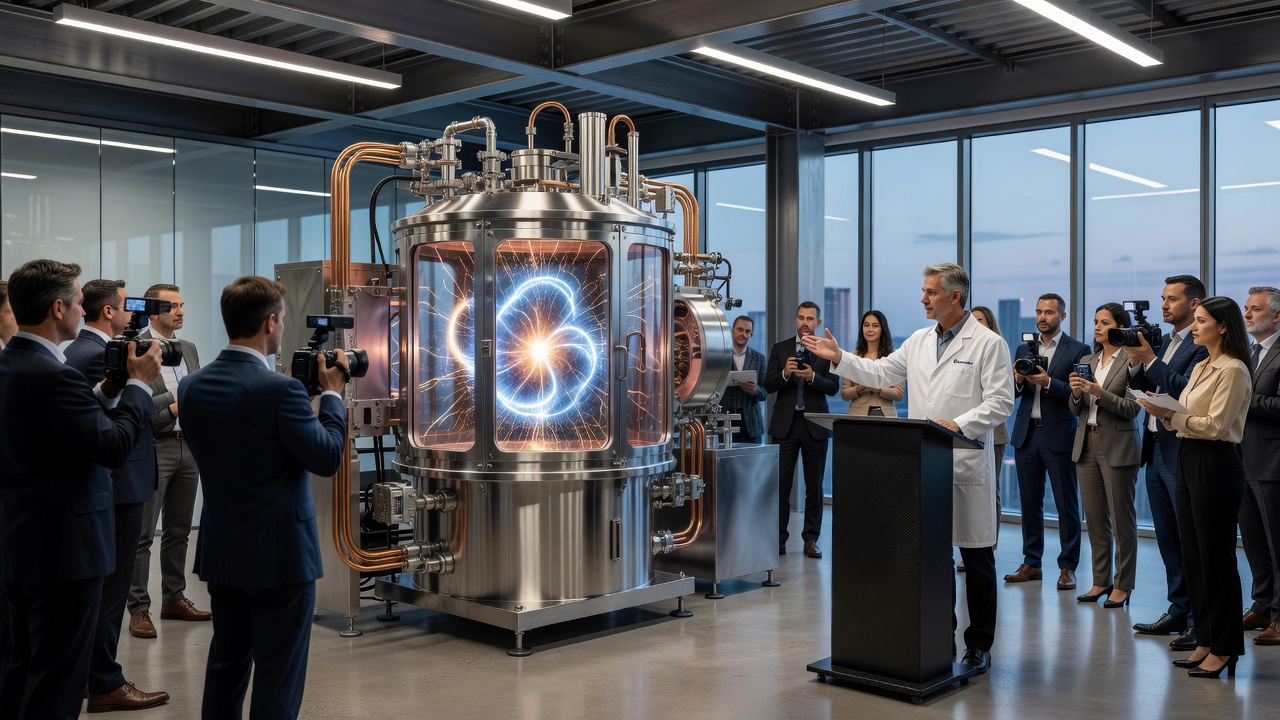
Industry experts anticipate that this innovation could accelerate the adoption of advanced materials in sectors including renewable energy and medical devices. Sparklab plans to collaborate with universities to further refine the process parameters for a wider range of materials. Funding from government grants has supported the project, highlighting the UK's commitment to cutting-edge research in experimental innovations. Future developments may include integration with artificial intelligence for predictive control of the sintering process. The unveiling event featured demonstrations of the equipment in action, showcasing its compact design suitable for laboratory and pilot production environments. Sparklab aims to commercialize the technology within the next two years through partnerships with manufacturing firms. Potential challenges include scaling the technology for larger components without compromising uniformity. Ongoing research addresses these issues by modifying electrode designs and chamber configurations. Publications detailing the findings are expected in peer-reviewed journals soon, contributing to the scientific community's knowledge base on plasma-assisted processing.