Parker Franke · 1 September 2026
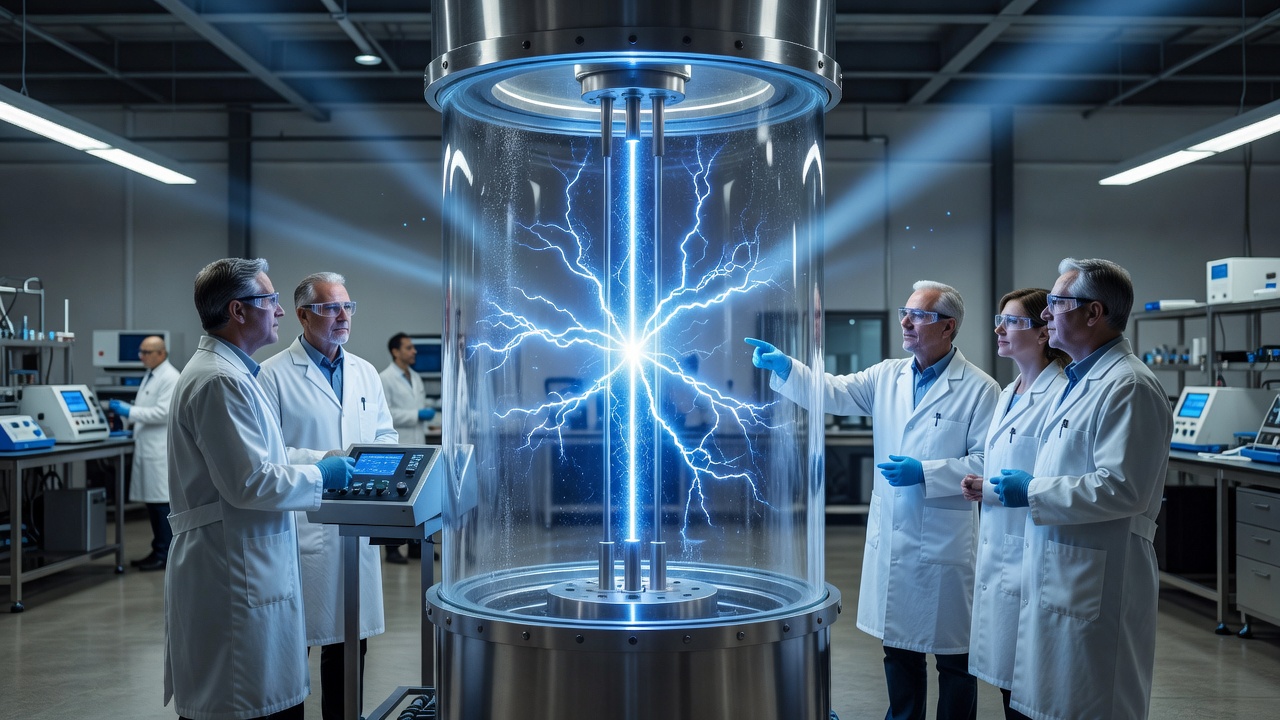
Sparklab Experimental Innovations has developed a new spark plasma technology at its United Kingdom laboratory. The system uses pulsed electric current and pressure to process advanced materials at lower temperatures and shorter times than conventional sintering methods. Researchers report improved density and microstructure control in metals, ceramics and composites.
Technical Specifications and Innovations
The technology operates with currents reaching 10,000 amperes and voltages up to 50 volts. Pulse durations range from milliseconds to seconds, allowing precise thermal management. Internal sensors monitor temperature, displacement and electrical resistance in real time. Software algorithms adjust parameters automatically to maintain optimal conditions during each cycle. Early tests produced tungsten carbide samples with 99.5 percent theoretical density in under 10 minutes, compared with several hours required by hot pressing. Energy consumption per batch is reduced by approximately 40 percent. The chamber accommodates specimens up to 150 millimetres in diameter and operates under vacuum or controlled atmospheres including argon and nitrogen.
Material scientists at the lab have processed titanium alloys, silicon carbide and graphene-reinforced composites. Grain growth remains limited due to rapid heating rates exceeding 200 degrees Celsius per minute. Mechanical testing shows hardness values 15 percent higher than conventionally processed equivalents. The equipment includes modular tooling that permits both spark plasma sintering and spark plasma joining in a single setup. Safety features incorporate multiple interlocks and emergency shutdown protocols compliant with UK industrial standards.
Potential Applications and Future Outlook
Initial interest has come from aerospace firms seeking lightweight, high-strength components and from electronics manufacturers requiring dense, thermally conductive substrates. Biomedical researchers are evaluating the process for producing porous titanium scaffolds with controlled pore sizes for orthopaedic implants. The laboratory plans to scale the technology to industrial volumes within two years through partnerships with equipment suppliers. Further work will focus on multi-material structures and recycling of metal powders. Sparklab continues to publish peer-reviewed data while maintaining selected intellectual property protections. The facility remains open for collaborative projects with academic and industrial partners across Europe.