Willa Jenkins · 5 September 2026
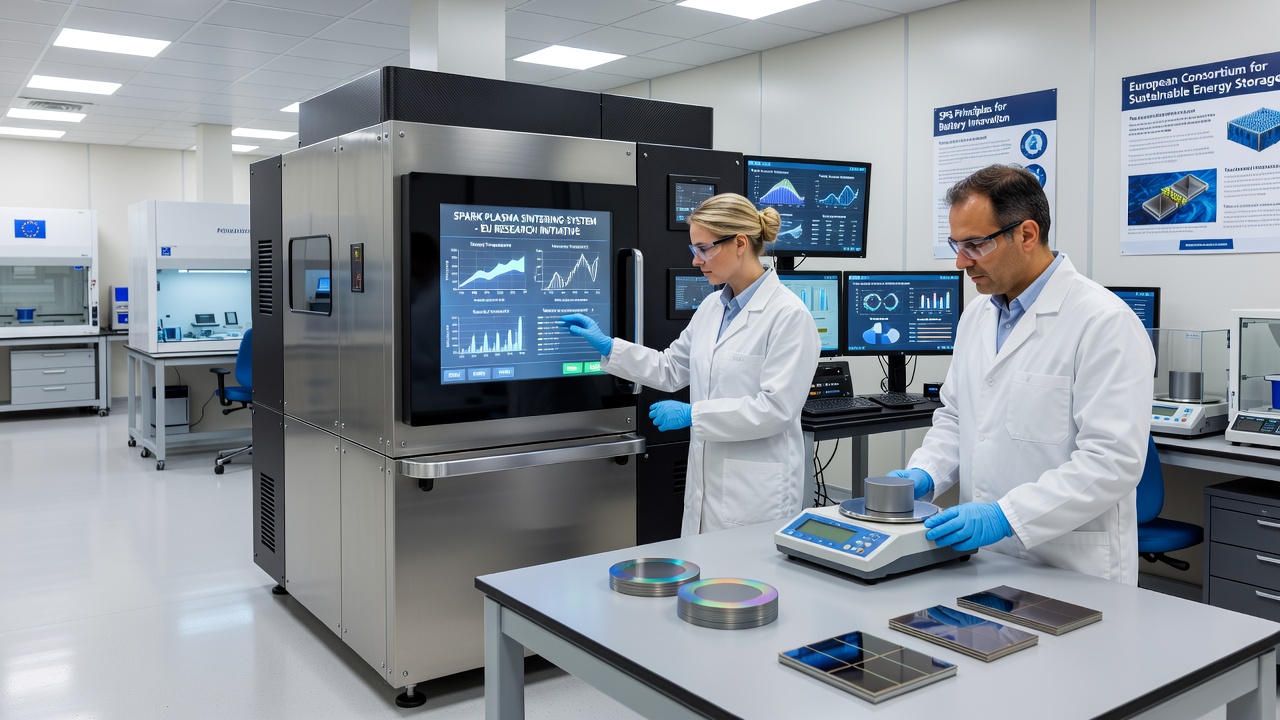
European research centers have turned their attention to spark plasma sintering as a method for creating advanced components in next-generation batteries, where rapid heating under pressure produces dense materials with controlled microstructures that support higher energy densities and improved cycle life. This technique applies pulsed electric current alongside mechanical pressure to consolidate powders into solid forms, often completing the process in minutes rather than hours required by conventional sintering approaches. Data from multiple facilities shows consistent results across electrode and electrolyte materials, including solid-state variants that reduce reliance on liquid electrolytes prone to leakage or degradation.
Core Principles Behind the Sintering Process
Researchers at institutions in Germany and France have documented how spark plasma sintering generates localized heating at particle contacts, which accelerates diffusion while limiting grain growth that can weaken mechanical integrity. The process parameters, such as current density, pressure levels, and dwell times, receive careful calibration to match specific battery chemistries like lithium-based or sodium-ion compositions. Studies indicate that temperatures typically range between 600 and 1200 degrees Celsius, though exact values depend on the powder composition and desired porosity levels in the final component.
European Facilities Driving Experimental Work
Centers affiliated with the Helmholtz Association and CNRS laboratories have run parallel investigations since the early 2020s, focusing on scalability from laboratory samples to prototype modules suitable for automotive and grid storage applications. One project tracked the fabrication of thin-film electrolytes with ionic conductivities exceeding those achieved through traditional pressing methods, while another examined composite cathodes incorporating silicon additives for enhanced capacity. These efforts align with broader EU funding streams that prioritize energy storage advancements, and reports from the European Commission detail allocated resources supporting equipment upgrades at participating sites.
By September 2026 several consortia plan to release comparative datasets from round-robin testing across five different facilities, allowing direct evaluation of reproducibility when identical powder batches undergo sintering under standardized protocols. The initiative includes partners from Sweden and the Netherlands who contribute specialized characterization tools such as in-situ X-ray diffraction during the sintering cycle itself.
Material Outcomes and Performance Metrics
Performance evaluations reveal that components produced via spark plasma sintering often exhibit reduced interfacial resistance when paired with lithium metal anodes, a factor that extends operational lifespan in solid-state configurations. Figures from published trials show capacity retention above 85 percent after 500 cycles in select pouch-cell formats, though results vary with the inclusion of dopants or coatings applied prior to consolidation. Observers note that the technique also accommodates complex shapes, which opens routes for three-dimensional electrode architectures that improve ion transport pathways compared with flat geometries.
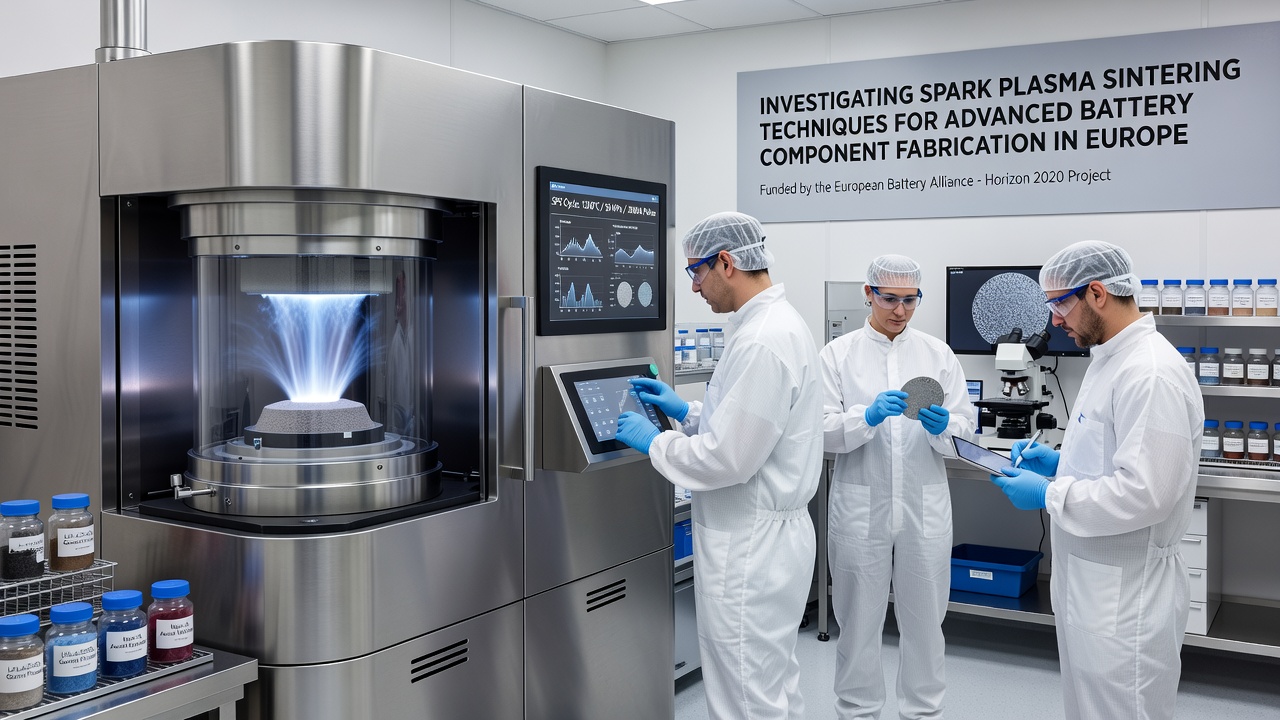
Additional work at Italian and Spanish laboratories has explored the incorporation of recycled battery materials into new sintered parts, demonstrating that the short processing window helps preserve valuable elements that might otherwise volatilize during prolonged heat treatments. These trials form part of circular economy programs supported by national agencies and tie into targets set under the EU Battery Regulation framework.
Integration with Existing Production Lines
Engineers examining scale-up pathways report that spark plasma sintering equipment can be adapted to continuous or semi-continuous operation through modular chamber designs, although throughput remains lower than established roll-to-roll processes used for conventional lithium-ion electrodes. Cost analyses prepared by research groups in Belgium highlight energy consumption per kilogram of material as a key variable, with current setups achieving parity in specific cases when accounting for the elimination of secondary heat-treatment steps. Partnerships with equipment manufacturers have led to prototype systems that incorporate real-time monitoring of electrical resistance and displacement to maintain consistent quality across batches.
Conclusion
European research centers continue to refine spark plasma sintering parameters for battery components, generating datasets that support wider adoption in both academic and industrial settings. The coordinated programs scheduled for release around September 2026 will provide further benchmarks on reproducibility and performance, while links to ongoing EU initiatives ensure alignment with regulatory and sustainability objectives. Additional details appear in project summaries available through the CORDIS portal and related academic repositories that catalog experimental protocols across participating nations.