Willa Jenkins · 3 October 2026
Advances in Spark Spectroscopy Illuminate Ancient Metal Craftsmanship Across Europe's Museum Holdings
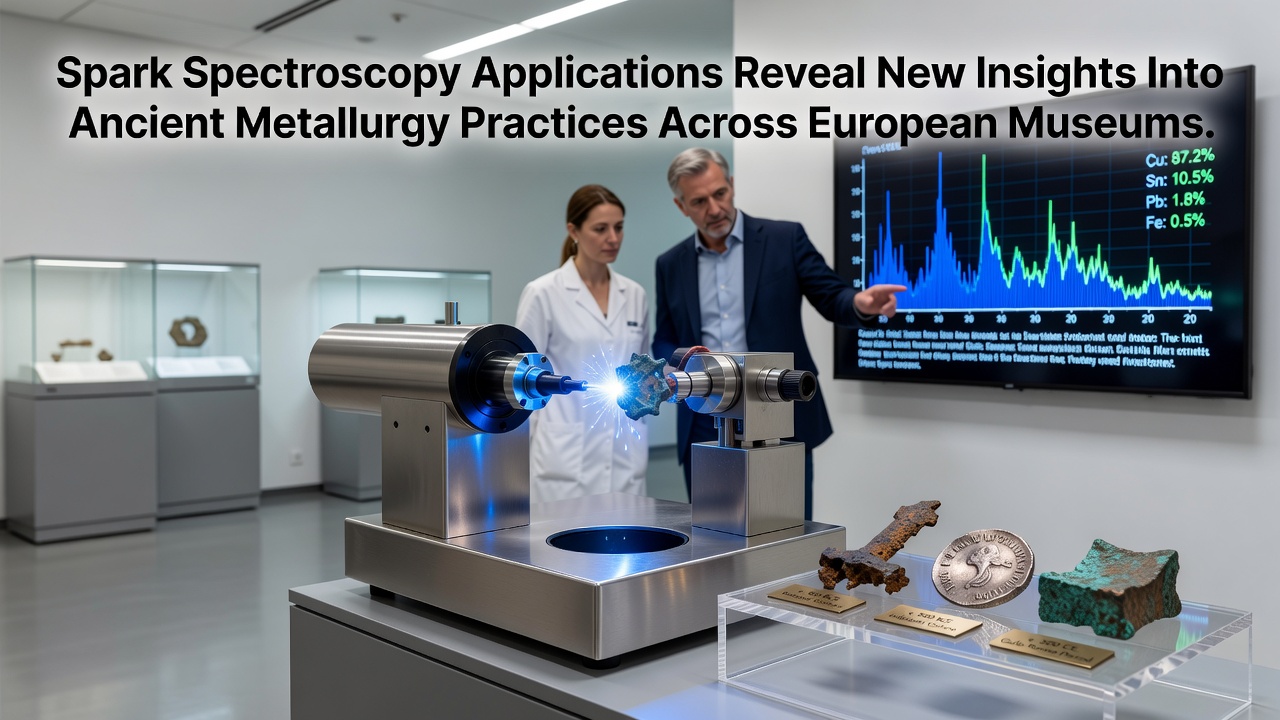
Researchers across multiple European institutions have turned to spark spectroscopy as a precise method for examining metal artifacts held in major museum collections, and this approach has produced detailed compositional data that refines understanding of ancient alloy recipes, smelting methods, and exchange networks from the Bronze Age through the Roman period. The technique generates a high-energy spark between an electrode and the sample surface, which excites atoms and produces emission spectra that reveal elemental concentrations without requiring large sample removal, and this non-destructive quality suits fragile objects conserved in institutions such as the Louvre, the Pergamon Museum, and the National Archaeological Museum in Athens. Data collected over recent campaigns show consistent patterns in trace elements like arsenic, antimony, and silver that distinguish local ores from imported materials, while also highlighting variations in casting temperatures and finishing steps that earlier visual inspections could not quantify.
Core Principles Behind Spark Spectroscopy in Heritage Science
Spark optical emission spectroscopy operates by creating a controlled electrical discharge that vaporizes a microscopic layer of the metal surface, and the resulting light emission passes through a spectrometer where wavelengths correspond to specific elements with detection limits often below 10 parts per million. Laboratories integrated this method with portable units that museum conservators can position directly on display cases or storage shelves, and calibration against certified reference materials ensures accuracy across copper, bronze, iron, and precious metal objects. Those who manage large collections note that the speed of each measurement, typically under two minutes per spot, allows systematic surveys of hundreds of items during a single project phase, and the resulting databases support statistical comparisons between regions and time periods.
Case Studies from Major European Collections
At the British Museum, analysts applied spark spectroscopy to a series of Iron Age swords recovered from river deposits, and results indicated deliberate additions of nickel and cobalt that align with ore sources in the eastern Alps rather than local British deposits. Similar work at the Museo Archeologico Nazionale in Naples examined Roman bronze statuettes, where elevated lead levels pointed to recycling practices that mixed scrap from multiple Mediterranean workshops. A parallel study conducted at the Rijksmuseum van Oudheden in Leiden focused on Celtic coins, and the elemental profiles revealed progressive debasement of silver content during the late first century BCE that correlates with documented economic pressures in the region. Observers note that combining these datasets with lead isotope ratios obtained from the same instruments strengthens provenance attributions, and several objects previously classified as imports now appear to represent hybrid manufacturing traditions that blended techniques from distant workshops.
Recent Projects and October 2026 Developments
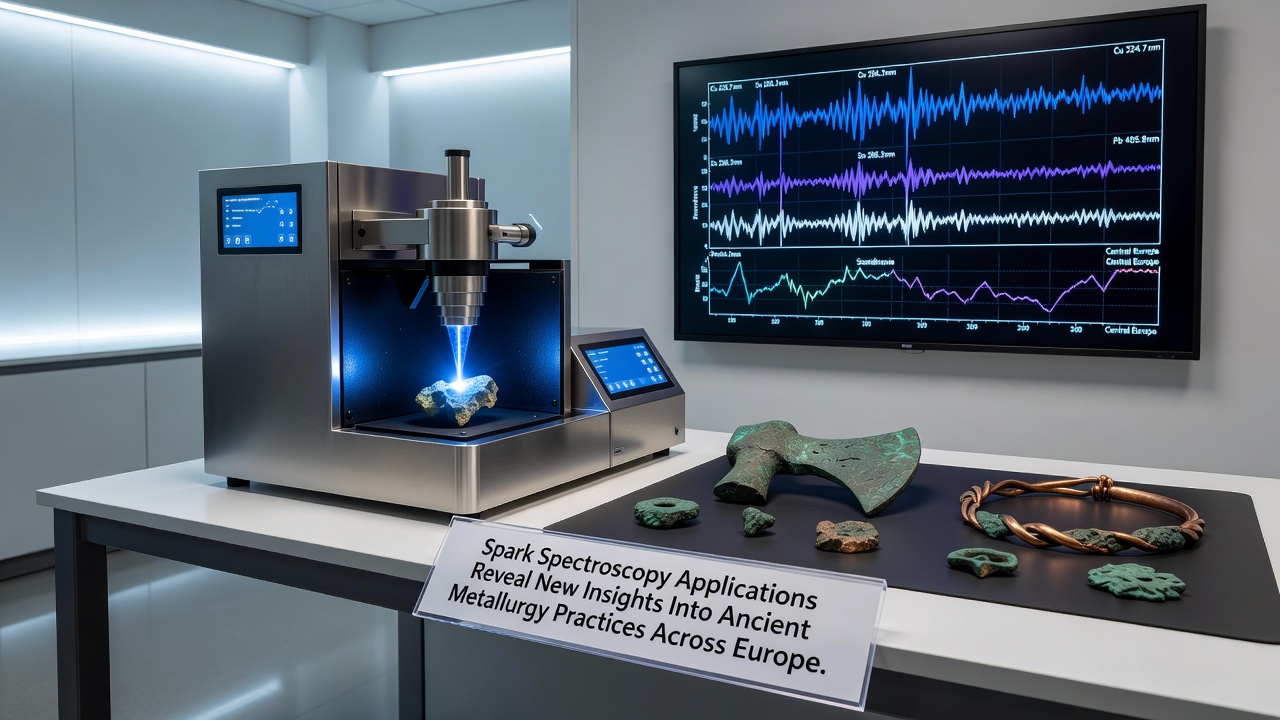
European Union-funded initiatives launched in 2024 expanded instrument access to smaller regional museums, and preliminary reports presented at the 2025 International Conference on Archaeometallurgy outlined uniform data protocols that enable cross-institution comparisons. In October 2026 a consortium based at the University of Bologna will release an open-access atlas compiling spark spectroscopy results from more than 1,200 artifacts spanning six countries, and this resource is expected to clarify previously ambiguous trade routes linking the Iberian Peninsula with the Carpathian Basin. The atlas incorporates three-dimensional mapping of alloy heterogeneity within individual objects, revealing that many swords and tools underwent multiple reheating cycles that redistributed trace elements in ways detectable only through dense sampling grids.
Integration with Complementary Analytical Techniques
Teams frequently pair spark spectroscopy with X-ray fluorescence and metallographic microscopy to cross-validate surface and bulk compositions, and this multi-method strategy reduces uncertainties that arise from corrosion layers or surface enrichment. Researchers at the Deutsches Bergbau-Museum in Bochum have documented how such combined datasets distinguish between primary smelting slags and secondary refining residues, thereby reconstructing workshop sequences with greater chronological resolution. Evidence from these integrated studies shows that certain decorative inlays once thought to be added in post-casting steps were instead cast-in using carefully controlled temperature gradients, and the resulting information revises models of technological knowledge transfer across the continent.
Conclusion
Spark spectroscopy continues to supply quantitative evidence that refines timelines and geographic attributions for ancient metal objects preserved in European museums, and ongoing expansions of portable instrumentation promise broader coverage of under-studied collections in coming years. The accumulation of standardized elemental profiles supports collaborative databases that link artifacts across institutional boundaries while preserving the physical integrity of each item, and the resulting insights contribute to more accurate reconstructions of prehistoric and classical metallurgical economies.